Take Two: Reimagining Photographs
The first image I chose to recreate was, Job Hunt, 1976 by Tracey Moffatt; from her series Scarred for Life.

Tracey Moffatt, Job Hunt, 1976, from the series Scarred for Life, 1994. © Tracey Moffatt. Courtesy of Roslyn Oxley9 Gallery, Sydney.
"Job Hunt, 1976" shows a young man wearing a button-down shirt with the top three buttons undone and a loosened tie. He has a frown and a tired, bothered expression. The text next to the photo reads: "After three weeks he still couldn't find a job. His mother said to him, 'Maybe you're not good enough.'"
Tracey Moffatt's series began in 1994. The series highlights impactful stories of childhood trauma and long-lasting emotional and psychological wounds; hurtful things adults say or do to kids. Each scene shows how someone is being hurt by their experience growing up.
I chose to recreate "Job Hunt, 1976" because when I was applying for computer science roles without my bachelor's degree, I had to scratch and claw just to get an interview. I felt angry getting rejected and ghosted after spending my time answering their interview questions. After going through the process multiple times, I felt as defeated as the young man in the photograph. Fortunately, my mother never talked down to me and did not pressure me while I was searching for employment.
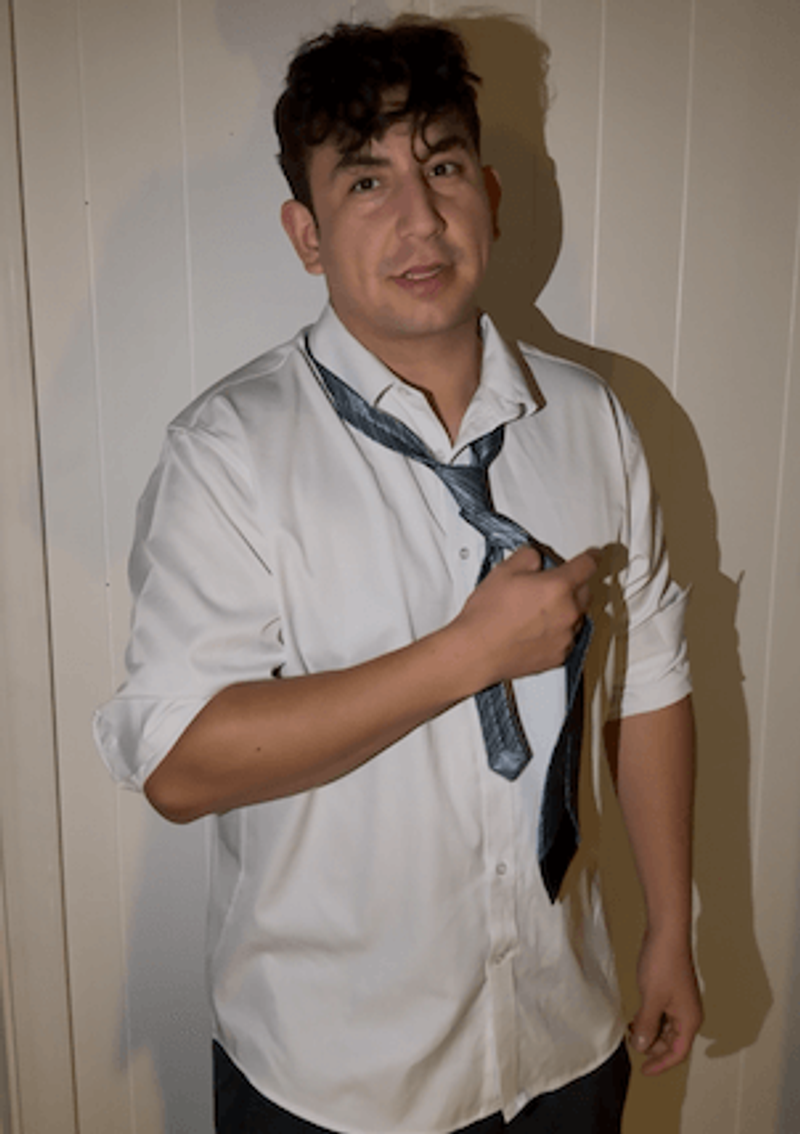
This series makes me feel sad, because parents really shape how you think, and without realizing it, as much as they love you and want what is best, they can pass on their own trauma and ancestral chains to their children.
------
For the second image, I chose Sophia Nahli Allison's self-portrait of her floating above her bed, named "Lucid Dreams," which is part of her series, Dreaming Gave Us Wings.
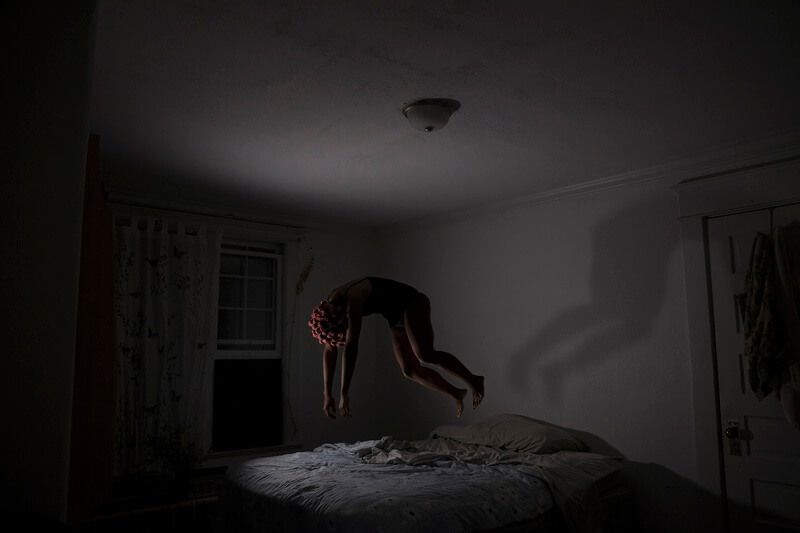
Allison, Sophia Nahli. "Lucid Dreams." 3Arts, https://www.3arts.org/site_media/cache/cd/b1/cdb1b58ed999fc185793970ca2890b03.jpg
Sophia Nahli Allison is a Oscar-nominated Black queer artist & filmmaker from South Central LA. Allison's work interprets personal and collective Black histories and experiences in creative ways. Allison explains that their series, Dreaming Gave Us Wings, which this image is a part of, was inspired by stories African and folklore where they imagine flying as a symbol of freedom; escaping hardships.
These are self-portraits displaying her own feelings and dreams. This particular photo, "Lucid Dreams", Sophia is floating above her bed in what appears to be her pajamas, and with pink rollers in her hair; the window is open and there is light doming through. The picture feels both dreamlike and calm.
I interpreted Allison's work as if, sleeping can takes us somewhere else. We leave our bed and it can be an escape from the problems or situation that we have in the real world. Oppositely, I also interpret it as if when you sleep there is movement of rising up; so dream; sky's the limit.
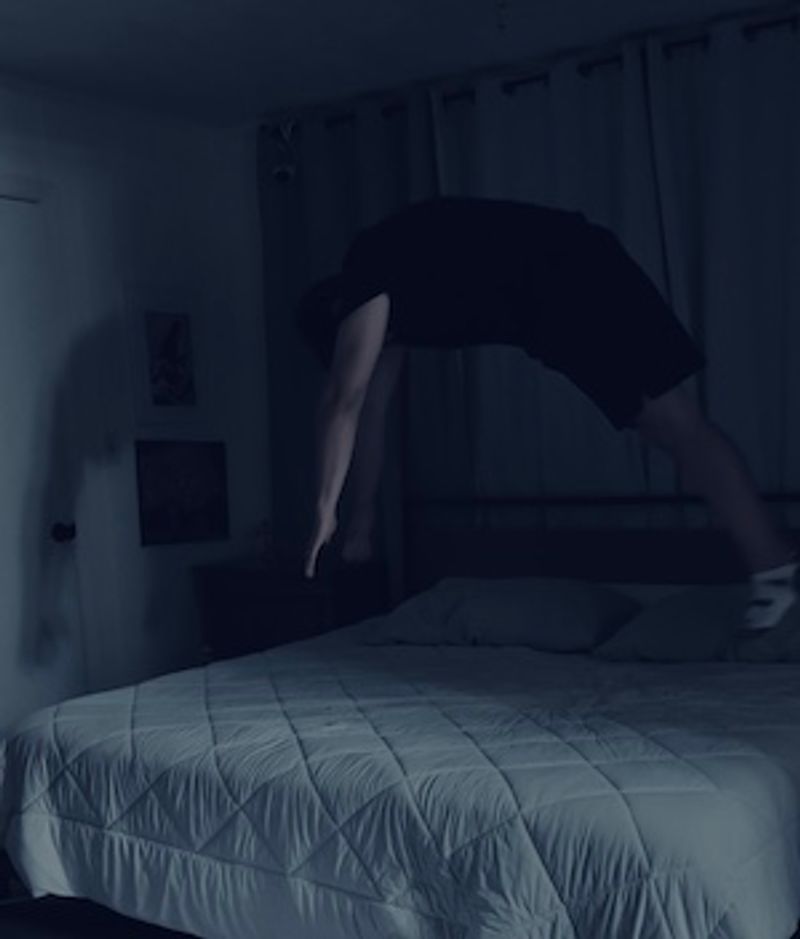
I chose to recreate this because it felt ethereal, other-worldly; aesthetic that I appreciate Additionally, I can relate with sleeping to escape reality.
---
Works Cited
Art Gallery of New South Wales. (2025). Tracey Moffatt. Retrieved November 12, 2025, from https://www.artgallery.nsw.gov.au/collection/artists/moffatt-tracey/
3Arts. (n.d.). Sophia Nahli Allison. 3Arts. https://www.3arts.org/artist/sophia-nahli-allison/
Allison, Sophia Nahli. “Revisiting the Legend of Flying Africans.” The New Yorker, 7 Mar. 2019, https://www.newyorker.com/culture/culture-desk/revisiting-the-legend-of-flying-africans. Accessed 12 Nov. 2025.